


Culver City Divorce Appraisals, Answering to a Date and Not to a Side
Which date your valuation answers to is a legal question, decided by the court and not by us. What we can tell you is how hard that date is to reach here, and why the answer depends on what the two of you own.
We are instructed by one spouse, by both, or by the court, and the report reads the same either way. Scope, effective date and fee are agreed in writing before any work starts, and the fee does not move with the conclusion. This page does not tell you what you are owed and it does not settle which date applies. It tells you how the number is built and what would have to be true for it to be wrong.
What makes this city harder than it looks
The Asset Is Larger Here, and the Comparable Set Is Thinner
Start with what Culver City actually is. Fifty five per cent of households here own the home they live in, against forty six per cent across Los Angeles County, and the median owner-occupied home is valued at $1,126,900 where the county median is $783,300.
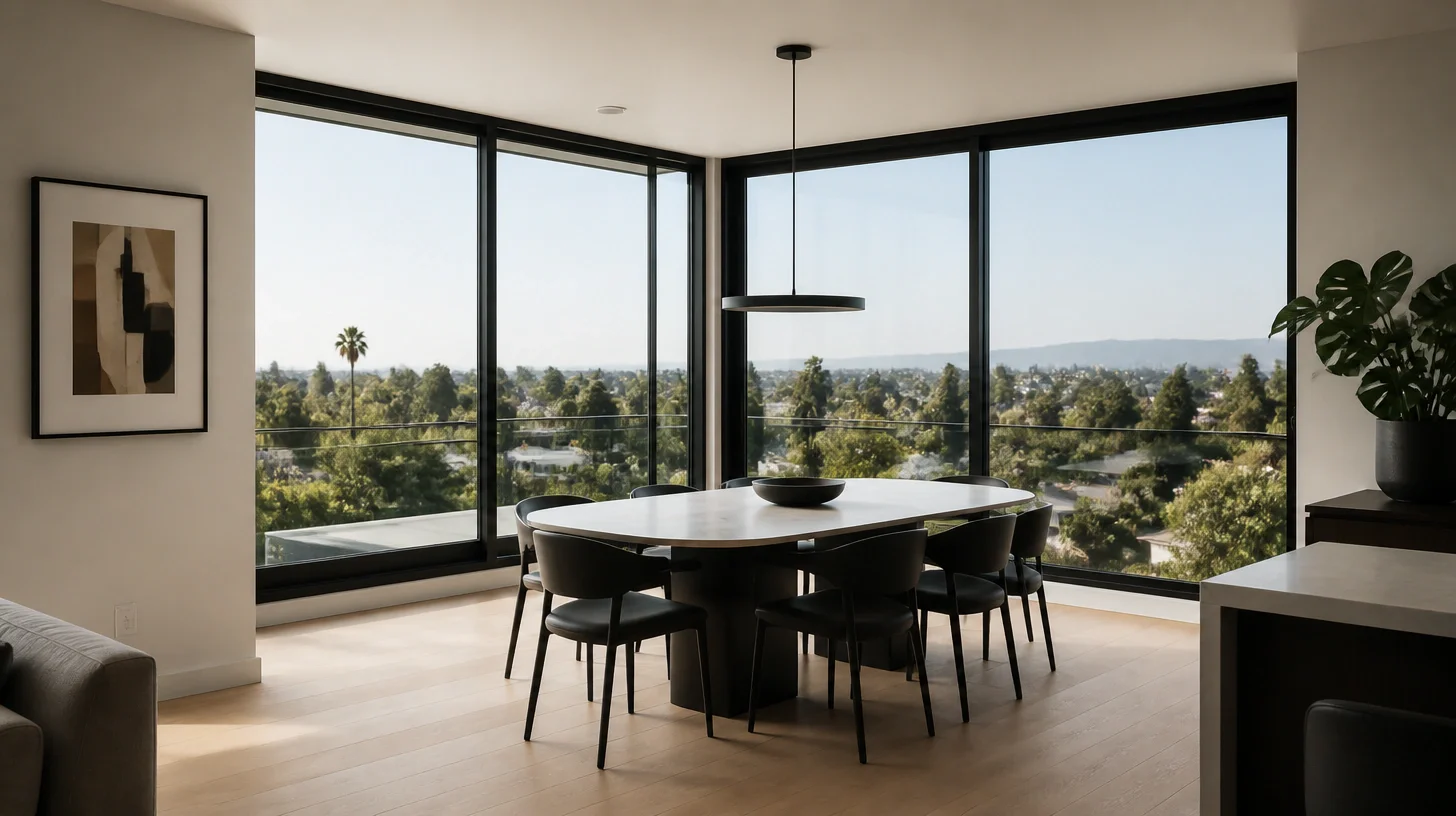
Then the part that surprises people. Culver City owns more than the county and is detached less. Thirty seven per cent of the housing stock is a detached single family house, where the county figure is forty eight, and almost seventeen per cent sits in buildings of fifty units or more. The home a Culver City couple is dividing is more likely than the county pattern to be attached, and to be worth close to half again the county median while being so.
That combination is the whole difficulty. At this median, a ten per cent error is $112,690, and split evenly it moves $56,345 from one of you to the other on the strength of the appraisal alone. An attached home is also the harder thing to value. Floor, exposure, stack position, parking assignment and the condition of the association all move value between units inside one building, and two units sharing an address are not interchangeable comparables merely because they share it. The city where the asset is largest is the city where the comparable set is hardest, and both of you are relying on the same number.
Those figures describe housing stock in this city. They are not a statement about your home, they are not a forecast, and nothing here tells either of you what you are entitled to.
If you are working out what this will involve before either of you instructs anybody, the Divorce Appraisal Success Kit sets out what an appraiser will need and what the two of you should agree before the engagement starts.

Three ways this arrives
Which of These Is You
What an appraiser will ask for, before either of you instructs anybody

YOU HAVE BEEN TOLD TO OBTAIN ONE
Counsel has asked for an appraisal as of a date already determined in your matter. You need somebody whose report will not be dismissed on its method, and you need the engagement documented so nobody can suggest later that it was arranged informally.

THE TWO OF YOU ARE INSTRUCTING TOGETHER
You have agreed on a single neutral appraiser rather than commissioning two reports that disagree. Both names go on the engagement, both of you receive the report at the same time, and neither of you gets a briefing the other did not hear.

YOU CANNOT DO THIS ALONE YET
The property is held jointly, you have not agreed on who to engage, or the court has not yet directed it. There is nothing here for you to sign today, and that is not a problem to be hurried. Knowing what an appraiser will ask for, and what the two of you will need to agree, is what makes the conversation shorter when it happens.
What the opinion rests on
Written to Be Read by Somebody Looking for Its Weak Point
Assume the report will be read by the party it does not favour, with counsel, looking for the sentence that does not hold. That assumption shapes how it is built. Every comparable is stated with the reason it was selected and the adjustment applied to it. Where an attached unit differs from the subject on floor, exposure, parking or association standing, the difference is named and quantified rather than absorbed silently into a single figure.
The scope of work, the intended use and the intended users are stated at the front, because a report relied on by somebody it was not written for is a report that has already failed. Who instructed the appraisal is recorded. Who paid is recorded. Neither changes the conclusion, and saying so plainly is easier than being asked.
Before either of you engages anybody
The Success Kit lists what an appraiser will need, what the two of you should agree in advance, and what an engagement letter should state. It does not value your home and it does not advise on your matter.
Why it is done this way
Neutrality Is a Method, Not a Promise
Anybody can say they are impartial. What matters is whether the working method makes partiality visible when it happens. Fees are agreed in advance and do not vary with the conclusion. The same scope is used whether one spouse instructs or both do. Findings are not previewed to one party. Comparable selection is documented well enough that a second appraiser could disagree with it specifically rather than generally, which is the only kind of disagreement that is any use to a court.
How it runs
Six Steps, and the First Two Decide the Rest
One. Intended use and intended users are settled first. Who will rely on this report is agreed before anything else, because it governs the scope and it governs who may use the result.
Two. The effective date is confirmed in writing. You, your counsel or the court tell us the date the valuation must answer to. We do not select it, advise on it, or express a view about which date applies to your marriage.
Three. Terms in writing. What is being valued, as of when, for whom and at what fee, all settled before any work starts and none of it reopened later.
Four. Inspection. What is present, what condition it is in, and what differentiates this unit from others that look comparable on paper.
Five. Analysis. Comparable selection and adjustment, with the reasoning recorded as it is made rather than reconstructed afterwards.
Six. Delivery. The report goes to the intended users named in step one, at the same time, with no separate commentary to either side.
Questions we are actually asked
Eight Questions, Answered the Same Way for Both of You
Who pays for it, and does that change what the report says?
Whoever instructs us pays. It is common for one spouse to instruct, for the two to split the cost, or for it to be dealt with later in the settlement. What paying does not do is change the conclusion. The report records who instructed it and who may rely on it, precisely so that the question of who paid is visible rather than something either of you has to wonder about.
Should either of us hold anything back?
No, and it is worth saying plainly because the opposite advice circulates. Withholding a fact does not remove it from the property. It removes it from the analysis, and an unstated fact cannot be verified. An unverified fact is the one the other side’s counsel will find. If something feels unhelpful to your position, it is better in the report with its context than discovered later without it.
How detailed is the report?
Detailed enough to be argued with specifically. Every comparable is stated with the reason it was selected and the adjustment applied to it. Scope of work, intended use and intended users appear at the front. A report that cannot be disagreed with in detail is not neutral, it is merely opaque, and opacity helps whichever side is not looking closely.
Our home is a condo. Does that make the appraisal harder?
Harder, and more common here than people expect. Thirty seven per cent of Culver City housing is a detached single family house against forty eight per cent across Los Angeles County, and almost seventeen per cent sits in buildings of fifty units or more. In an attached home, floor, exposure, stack position, parking assignment and the condition of the association all move value between units in the same building. Two units sharing an address are not interchangeable comparables, and the report has to say why the ones selected were selected.
Can one of us order the appraisal without the other agreeing?
Sometimes, and it depends on your matter rather than on us. One spouse can instruct, the two of you can instruct jointly, or the court can direct it. Whichever applies, the report names the instructing party and the intended users, and the scope does not change with who signed. If you are not sure which applies to you, that is a question for your counsel and not one we can answer for you.
Who decides the date the appraisal is done as of?
Not us. Under California Family Code section 70 the date of separation is a finding of fact the court reaches, having regard to whether one spouse expressed the intent to end the marriage and whether their conduct was consistent with it, and the court considers all relevant evidence. We are instructed as to a date. We do not select one, advise on which applies, or express a view about your marriage.
If we each hire our own appraiser, what happens?
You get two opinions and the difference between them becomes something else to argue about. That is sometimes unavoidable and sometimes deliberate. A single neutral appraiser instructed by both of you removes that argument, which is why joint instruction is common. It is your decision and not one we push, and we work the same way either way.
What would make a report easy to challenge?
A comparable selected without a stated reason. An adjustment applied without a stated basis. An effective date that does not match the instruction. A conclusion that is relied on by somebody the report never named as an intended user. Those are the things counsel looks for first, and they are the reason the method above is written down rather than assumed.
If your question is a legal one, your counsel is the right person to ask and we will say so rather than answer it.
Who reads the figure
Four Readers, and Each Needs Something Different From It
The instructing spouse needs a number that will hold when it is challenged, and a clear statement of what it does and does not cover.
The other spouse needs to see the method well enough to satisfy themselves that no thumb was on the scale. That is a legitimate need and the report is written to meet it.
Counsel on either side needs to see the boundaries of the instruction drawn plainly, because the reports that come apart under examination are almost always the ones stretched to answer a question they never claimed to.
The court, where it comes to that, needs an opinion whose reasoning is visible.
Reliance belongs to the intended users named in the report. Somebody not named in it is not an intended user, whatever use they later make of it.
Where we work
Every Property in Culver City
We appraise every property type in Culver City, detached and attached, across the whole city rather than a selected part of it. Given that most of the housing stock here is not a detached single family house, a practice that is only comfortable with detached comparables is not much use in this city.

Before you decide anything
Three Things Worth Reading First
THE RESOURCE HUB
Background on how valuations are built and what separates an opinion that holds from one that does not.
WHAT IS IT WORTH
Working through what actually drives value in a specific property rather than in a market.
THE DIVORCE APPRAISAL SUCCESS KIT
What an appraiser will need, what the two of you should agree before instructing, and what an engagement letter should say.
If this is not quite your situation
Where to Go Instead
Los Angeles Divorce Appraisals
When You Are Ready, or When You Are Not Yet
If you have a date and an instruction, we can start. If you do not, the Success Kit is the more useful of the two and there is no hurry about the other.
Scope, effective date and fee agreed in writing before any work begins.