


North Hollywood Trust & Estate Appraisals — Independent Date-of-Death Valuations
USPAP-compliant real property appraisals for successor trustees, executors, estate attorneys, CPAs, and beneficiaries — developed as of the date that governs your matter.
We appraise North Hollywood single-family homes, condominiums, ADUs, converted garages, and 2–4 unit properties using property-specific market evidence and a clearly stated effective date.
Understanding the Assignment
The Effective Date Is the Whole Assignment
Administering a trust or estate is usually something people do once, under time pressure, and often while grieving. An appraisal removes one variable from that: it establishes what the property was worth on the date that matters, with the reasoning written down.
For a decedent’s trust or estate that date is almost always the date of death. Internal Revenue Code section 1014(a)(1) fixes the basis of inherited property at its fair market value on that date, and section 1014(b)(2) reaches property held in an ordinary California revocable living trust. Confirm the governing date with your attorney or CPA before the appraisal is ordered — changing it afterwards usually means a new assignment, not an amendment.


What to Provide
Tell us what is unavailable rather than guessing. Missing records rarely stop an assignment — they change how the analysis is supported, which we explain before work begins.
- The effective date your attorney or CPA has confirmed, or a note that it is still being decided.
- Property address and APN, plus any deed or title information.
- Who can authorise access, and whether the property is occupied.
- Trust documentation or letters, as your attorney directs.
- Records of improvements, additions, or permits, where they exist.
- Prior sale, listing, or remodel history if you know it.
- Any condition issues, deferred maintenance, or tenant considerations.
Representative Scenarios
Where a Trust or Estate Appraisal Usually Comes In
The three situations below are illustrative descriptions of common assignment types, not accounts of specific clients. They are provided so you can recognise where your matter sits before you call.
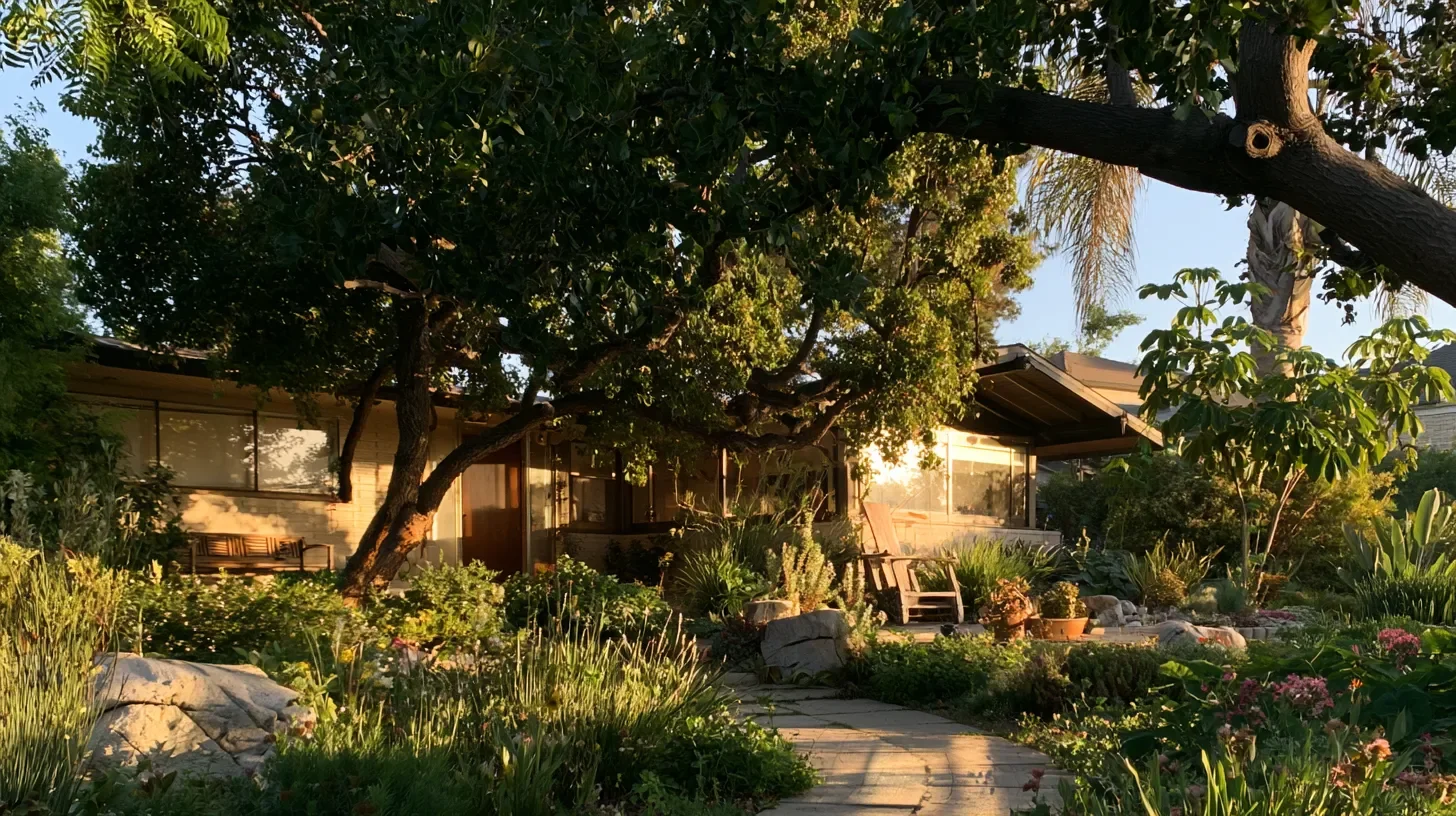


These are illustrative assignment types. They are not client testimonials, and no client identity, outcome, or rating is represented.
Standards We Work To
What You Can Rely On, and What We Do Not Claim
Trust and estate work is read by people who are entitled to question it. The report is built for that.
-
USPAP-compliant reporting
Developed under the Uniform Standards of Professional Appraisal Practice, so an attorney, CPA, trustee, or beneficiary can follow the reasoning rather than accept a number on faith.
-
Effective-date discipline
The governing date is confirmed in writing before analysis begins and stated plainly in the report. Retrospective assignments are routine in this work.
-
Independence and impartiality
The analysis is not adjusted to suit any beneficiary, any pending transaction, or the party who engages us. It is developed the same way regardless.
-
Property-specific evidence
Comparable selection reflects the actual property — added living area, permit status, condition on the effective date — rather than a neighbourhood average.
-
Communication with your advisors
We coordinate directly with trustees, estate attorneys, and CPAs on scope, intended use, and delivery, and remain available for follow-up questions on the file.
-
Confidential handling
Assignment information and completed reports go to you and to the parties you authorise, and nobody else. Access is coordinated discreetly.
A Note on Scope
This page is general information, not legal or tax advice. We describe what our reports are prepared to support.
We do not claim guaranteed court or IRS acceptance of any appraisal. We do not advise which valuation date, tax election, or property tax claim is right for your situation, and we do not represent that an appraisal prevents disagreement among beneficiaries.
Ask your attorney or tax professional what your matter requires. We will tell you plainly what our report can and cannot support before you engage us.
The WCE Difference
A Consortium of Appraisers, Not a Single Desk
West Coast Evaluation is built as a consortium of appraisers rather than one practitioner taking every assignment that arrives. Trust and estate work is matched to appraisers with relevant experience in the property type and the market involved — a Valley Village condominium, a Lankershim-corridor 2–4 unit building, and a single-family home with a converted garage are genuinely different assignments.
That structure exists to serve one purpose: a report read by a trustee, a CPA, and several beneficiaries should reflect someone who has actually valued that kind of property in that kind of market, and it should read the same way every time.
About West Coast Evaluation-
Assignment Matching
Work is routed by property type and market familiarity rather than by whoever is free.
-
Retrospective Experience
Date-of-death assignments depend on evidence that is no longer in front of you. The consortium carries appraisers who work with historical listing records, permit history, and public records routinely rather than occasionally.
-
Professional Review
Reports move through quality review before delivery, so the reasoning and supporting data are checked before a CPA or a co-beneficiary sees them.
-
Consistent Standards
The same documented WCE standards apply across every city and service page, so a North Hollywood trust report is structured like a Burbank, Glendale, or Pasadena one.
-
Breadth of Local Experience
Across the consortium, WCE maintains active trust, estate, and inheritance valuation coverage throughout the San Fernando Valley and greater Los Angeles County.
The Process
Six Steps, With Scope and Fee Confirmed Before Any Work Begins
Nothing starts until the effective date and the intended use are settled in writing. That single step prevents most of the rework that occurs in trust and estate assignments.
-
Initial consultation and confirmation of the assignment
We identify the property, the intended use, and who the client is — typically the trustee, executor, attorney, or CPA named in the engagement agreement. The governing effective date is confirmed with your advisor at this stage, and scope, fee, and delivery window are put in writing before work begins.
-
Scheduling a convenient inspection
We coordinate around occupancy and access. Trust properties are commonly occupied by a surviving spouse, a beneficiary, or a tenant, and that is an ordinary assignment variable rather than an obstacle.
-
Property inspection
Condition and characteristics are documented, including added living area and its permit status where records exist. You do not need to clear out the home first — personal property and clutter do not change the opinion of value.
-
Market research and comparable sales analysis
Comparable sales are analysed as they stood on the effective date, not as the market looks today. Where the date is in the past, the analysis draws on historical listing records, permit history, assessor and public records, and sale documents.
-
Development of the USPAP-compliant report
Reconciliation and quality review are completed before delivery. The report states the effective date plainly, identifies the intended use and intended users, and documents what evidence was available and how condition on that date was established.
-
Secure delivery to the identified client
The completed report goes to the client identified in the engagement agreement and to any parties you authorise — commonly your attorney, CPA, or co-trustees. We remain available for follow-up questions on the file.
Frequently Asked Questions
North Hollywood Trust & Estate Appraisal Questions
Answers first. Where a question turns on your particular matter, we say so and point you to your attorney or CPA rather than guessing on your behalf.
What is a trust or estate appraisal, and what does it establish for a North Hollywood property?
It is an independent opinion of the fair market value of real property, developed for trust administration, estate settlement, tax reporting, or distribution among beneficiaries.
It is prepared under USPAP so that attorneys, CPAs, trustees, and beneficiaries can read the reasoning rather than accept a number on faith. It establishes value as of a stated effective date — not a listing price and not a current market estimate.
Does a trust need a probate referee, or can the trustee hire an appraiser directly?
The trustee can normally engage an appraiser directly. California Probate Code section 16247 gives the trustee the power to hire appraisers, including probate referees — it is a power, not a requirement, and trust administration under a funded revocable trust is generally not court-supervised.
Probate is different. Where assets pass through probate, the personal representative files an inventory and appraisal under Probate Code section 8800 and the probate referee has a statutory role. There is also one specific trust-adjacent situation where a referee is required — see the $750,000 question below. Ask your attorney which route applies to your matter.
What date will the appraisal use, and can it be a date in the past?
The date your attorney or CPA confirms. For a decedent’s trust or estate it is most often the date of death, because that is the date Internal Revenue Code section 1014(a)(1) ties inherited-property basis to.
Yes, it can be a date in the past. That is a retrospective assignment and it is routine in trust and estate work. Other effective dates arise too — the date an asset was funded into the trust, or the current date where a trustee is evaluating a sale or a distribution today. Changing the effective date after the fact usually means a new assignment rather than an amendment.
What is the alternate valuation date, and does it apply to our estate?
For most estates, it does not. The alternate valuation date under Internal Revenue Code section 2032 lets an executor value the gross estate six months after death — but only by making an election on a filed federal estate tax return, and only where that election decreases both the value of the gross estate and the tax due. It is irrevocable.
Since a federal estate tax return is generally required only where the gross estate exceeds the filing threshold — $15,000,000 for deaths in 2026 — the alternate date is simply not available to the large majority of estates. Be cautious of any appraiser who offers it as a routine menu option. Your CPA or estate attorney determines whether it is in play.
How does the date-of-death value affect the step-up in basis for beneficiaries?
Internal Revenue Code section 1014(a)(1) sets the basis of property acquired from a decedent at its fair market value on the date of death, and section 1014(b)(2) reaches property held in an ordinary California revocable living trust. That adjusted basis is what a later sale is measured against.
The adjustment is automatic in principle, but the amount depends on a supportable opinion of fair market value on that date. A documented appraisal is how that figure is supported. We do not advise on your tax position — that is your CPA’s role.
How does Proposition 19 affect an inherited North Hollywood family home?
Proposition 19 treats the date of death as the date of change in ownership, and applies to deaths on or after 16 February 2021. The parent-child exclusion is limited to a family home that was the principal residence of the transferor and becomes the principal residence of the transferee, or to a family farm.
The value limit is the factored base year value plus $1,000,000 as adjusted — $1,044,586 for transfers between 16 February 2025 and 15 February 2027. Where market value exceeds that limit, the excess is added to the factored base year value.
This is why the date-of-death value matters locally as well as federally: on a long-held North Hollywood property, the gap between factored base year value and current market value is often exactly what determines whether a transfer stays inside the limit. Filing requirements and deadlines are set by the Los Angeles County Assessor — confirm them with the Assessor and your advisor.
The house is worth less than $750,000. Do we still need a full probate?
Possibly not. Under Probate Code section 13151, where a decedent leaves California real property that was their primary residence and its gross value does not exceed the threshold, a successor may petition the superior court to determine succession without letters of administration, once 40 days have passed since the death. For deaths on or after 1 April 2025 through 31 March 2028 that threshold is $750,000, set by AB 2016.
This is the one place a probate referee genuinely is required. Probate Code section 13152(b) requires an inventory and appraisal to be attached to the petition, and requires that the appraisal be made by a probate referee appointed for the county where the property sits. Your attorney will tell you whether this procedure fits your matter.
Can the property be appraised if it has already been sold, cleared out, renovated, or demolished?
Yes. This is common and it is workable. A retrospective appraisal values the property as it was on the effective date, not as it is now.
Where the property has changed, the analysis relies more heavily on documentation — prior listing photographs and remarks, permit history, assessor and public records, sale documents, and information from people who knew the property. The report explains what evidence was available and how condition on the effective date was established. Repairs made after the effective date do not change a retrospective opinion of value.
How are North Hollywood ADUs, converted garages, condominiums, and 2–4 unit properties handled?
Added living area is identified, the available permit record is documented, and the contribution the market actually recognises is reflected. Unpermitted area is neither ignored nor valued as permitted space by default.
This matters more in North Hollywood than in a uniform tract market. Detached ADUs, garage conversions, and additions of varying permit status are common here, and they are not interchangeable with permitted living space. Condominiums bring HOA, parking, floor-location and amenity factors; 2–4 unit properties bring income characteristics. Selecting the right comparable set is where the work is.
How long does a North Hollywood trust or estate appraisal take, and what affects the fee?
Both are quoted per assignment and confirmed in writing before any work begins.
The variables are property type and complexity, how far in the past the effective date is, access and occupancy, what documentation is available, and whether multiple units or added living areas are involved. Tell us what is unavailable rather than guessing — missing records rarely stop an assignment, they change how the analysis is supported.
How It Works
From First Call to Delivered Report
Most trustees are doing this for the first time. Here is the shape of the engagement from your side of it, and the kinds of decisions an appraisal is usually built to support.
-
Step 1
You get in touch
Through the request form or by phone. Tell us the property, the effective date if it has been confirmed, and who needs to receive the report.
-
Step 2
We confirm scope in writing
Intended use, intended users, the governing effective date, fee, and delivery window — all settled before any work starts.
-
Step 3
We inspect the property
Scheduled around occupancy and access, and handled discreetly. No clean-out required.
-
Step 4
We develop the value
Market and comparable sales analysis as of the effective date, then reconciliation and quality review.
-
Step 5
You receive the report
Delivered securely to the client named in the engagement agreement and anyone you authorise. We stay available for questions.
What These Appraisals Are Usually Built to Support
-
Trust accounting and administration
Supporting the trustee’s duty to keep beneficiaries reasonably informed under Probate Code section 16060.
-
Tax-basis documentation
Supporting the fair market value figure your CPA relies on for basis under section 1014.
-
Distribution in kind
Where property rather than cash passes to a beneficiary, and the trustee must deal impartially among them under section 16003.
-
Beneficiary buyout
Giving co-beneficiaries a common basis to negotiate from when one wants to keep the property.
-
Retrospective date-of-death valuation
Where the effective date is months or years in the past and the evidence has to be reconstructed from the record.
-
Proposition 19 planning support
Providing the market value figure your advisor needs when assessing the parent-child exclusion value limit. We do not file or advise on the claim.
If Your Matter Is Not a Trust
Trust administration, probate, and marital property division follow different processes and different rules. If one of the pages below fits your situation better, start there instead — we would rather send you to the right page than sell you the wrong assignment.
-
North Hollywood Probate Appraisal
Where the estate is court-supervised, and the inventory and appraisal process applies.
-
North Hollywood Divorce Appraisal
Where the property is being divided between spouses and the valuation date is set by the Family Code.
-
North Hollywood Residential Appraisal
Where you need a current-date valuation for a sale, a refinance, or your own planning.
Service Area
North Hollywood Is Not One Market
Los Angeles City Planning places North Hollywood within the North Hollywood–Valley Village Community Plan area, which also takes in Valley Village and Valley Glen and contains multiple overlays and districts.
Lower-density residential streets sit alongside condominium and townhome development, apartment and 2–4 unit buildings, and transit-oriented corridors along Lankershim Boulevard. For trust and estate work that variety is the whole difficulty: a neighbourhood average is not an answer, and the comparable set has to be chosen for the specific property.
-
NoHo Arts District
Mixed-use and higher-density context near the transit corridor.
-
Mid-Town North Hollywood
Established residential streets with a high incidence of added living area.
-
Northeast North Hollywood
Single-family stock adjacent to denser multifamily zoning.
-
North Hollywood West
Post-war tract character with long-tenure ownership.
-
Valley Village
Within the same Community Plan area, with its own specific plan.
-
Valley Glen
Also within the Community Plan area, with distinct residential character.
-
Toluca Lake adjacency
Boundary conditions where adjacent-market evidence needs care.
-
Lankershim corridor
Transit-oriented parcels where zoning context affects value.
Beyond North Hollywood
The consortium covers trust, estate, and inheritance assignments throughout the San Fernando Valley and greater Los Angeles County, including Burbank, Glendale, Pasadena, Hollywood, West Hollywood, and the Westside.
Appraisers travel to the property. If your matter involves a property outside this area, ask and we will tell you plainly whether we can take the assignment.
Further Reading
Before You Engage Anyone
Three pieces worth reading if you are a trustee or executor working out what you actually need.
-
Why the report type matters
Why Courts Reject Bank Appraisals in Trust & Inheritance Cases
A refinance or lender appraisal is developed for a different purpose, a different client, and usually a different date. Why that matters when the reader is a CPA or a co-beneficiary.
-
How a past date works
Retrospective Appraisals: How One Date From the Past Shapes Everything
A date-of-death valuation is a retrospective assignment. What evidence it relies on, and why the property having since changed is not an obstacle.
-
What to have ready
Estate Appraisal Preparation Guide
What to gather before the inspection, what you can skip, and which gaps genuinely change how the analysis is supported.
North Hollywood Trust & Estate Appraisal
Start With the Date, and We Will Take It From There
Tell us the property, the effective date if it has been confirmed, and who needs to receive the report. We confirm scope, fee, and timing in writing before any work starts.
Prepared for successor trustees, executors, estate attorneys, CPAs, and beneficiaries.
Secure request form · no obligation · scope and fee confirmed in writing first
-
Independent and impartial valuation
developed the same way whoever engages us
-
A clearly documented effective date
date of death, or another date once your attorney or CPA confirms it
-
Written for trustees, attorneys, CPAs, and beneficiaries
who are entitled to read the reasoning, not just the number
Not ready to submit the form? You can open our preparation guide to see what to have ready, or call to discuss the property first.
(310) 955-1147Clear Scope. Local Evidence. A Value Conclusion You Can Understand.
Powered by Icon Enterprises LLC