


One Court. Not One Market.
An estate here is administered by a single court on a single timetable. The property it holds could be almost anywhere in a county that runs from this valley to the state line, and where it sits decides which sales it should ever be compared against.
Scope, users and fee are agreed in writing before any work starts. This page sets out when an appraisal is actually needed, and what changes once you know where in the county the property sits.
Why the location does more work here than the deadline
The Court Is County-Wide. The Comparables Are Not.
Take the measured part first. San Bernardino County covers a span of about 208 miles from its western edge to the state line, and this city sits at the western edge of it. The county’s housing is also younger than the city’s: the median home in the city was built around 1973, against roughly 1983 across the county as a whole.
Now the part that is reasoning rather than measurement, and it is better labelled than dressed up. An area that size, built out over that spread of decades, does not behave as one housing market. Neither of those figures measures a market. They measure distance and construction date, and the conclusion drawn from them is ours.
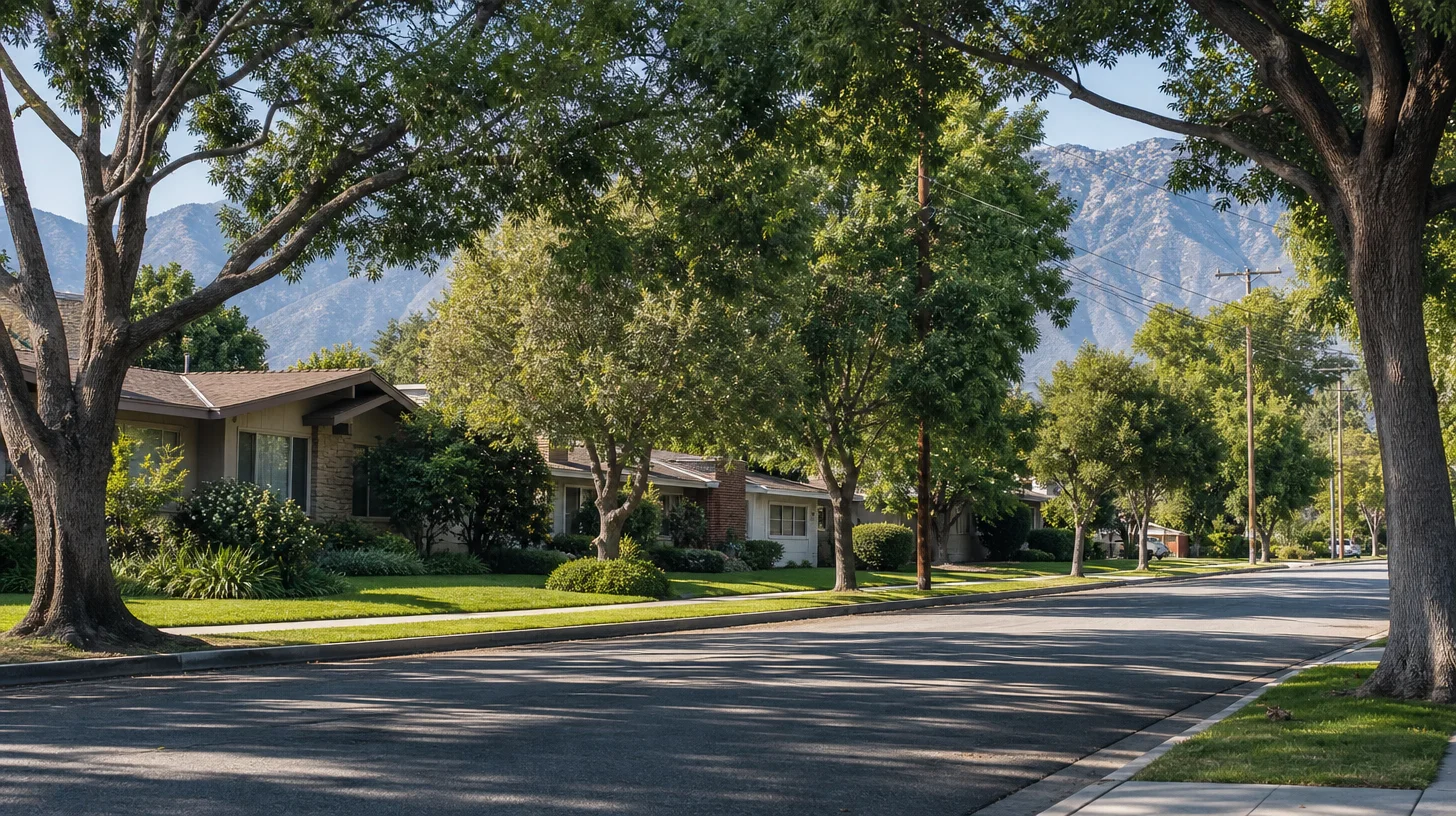
Why it matters to an estate is direct. Two estates can be filed in the same courthouse, answer to the same requirements and share the same deadline, and still hold properties that have almost nothing to do with one another as valuation problems. One may be a 1970s house on a shaded street a few minutes from the court. Another may sit on an open parcel an hour north over the pass, where the nearest comparable sale is a different kind of property on a different kind of lot.
Neither is the better place and neither is the harder assignment. They are simply not the same assignment, and an appraisal that treats the county as one market is doing less work than it appears to. Which sales belong in the comparison is decided by where the property is, not by which court the paperwork went to. The Success Kit sets out what an executor is usually asked to gather.

Three ways this lands on someone
How Executors Usually Arrive Here
THE ATTORNEY HAS ASKED FOR A VALUATION
Often for a date that has already passed, which is ordinary work rather than a complication. What matters is that the reasoning is written down, because somebody who was not there will read it later.
THE ESTATE HOLDS PROPERTY YOU HAVE NEVER SEEN
An inherited parcel in another part of the county is common here and is not a problem to be apologised for. It changes which sales are relevant, and that is a question about the analysis rather than about the estate.
NOBODY HAS TOLD YOU WHETHER YOU NEED ONE
You have been handed a task without being told its shape. This is a legitimate place to start and we treat it as one. Sometimes the answer is that a formal appraisal is not what your situation calls for.
What the opinion rests on
Which Sales, From Which Market, and Why Those
Where a county holds several distinct markets, choosing the right sales carries most of the weight. So the report states which transactions were used and what made each one comparable, what was adjusted and on what evidence, and what could not be established at all.
A retrospective valuation, one prepared for a date in the past, is held to the same standard. The sales considered are the ones available as at that date, and the report says so rather than quietly using later evidence.
Anything that could not be established is stated as unestablished. A report that overreaches survives exactly one careful reader, and in an estate the person it strands is usually a beneficiary who was never in the room.
Scope sets the fee, both are agreed before work starts, and neither moves with the number the analysis arrives at.
What an executor is usually asked to gather
A working list rather than a brochure: the documents that genuinely change an analysis, the ones that merely reassure, and what an engagement letter should state before you agree to it.
Where our work stops
A Method You Can Check, and a Line We Do Not Cross
Anyone can assert accuracy. What can be examined is whether the reasoning is visible: which sales, why those, what was adjusted, what was not established.
We value property. We do not advise on probate procedure, on whether an estate must go through the court, on what has to be filed or by when, or on any tax position arising from a death. Those belong to your attorney and your accountant, and we will say so rather than guess in their direction. Where a formal appraisal is not what your situation needs, we would rather tell you than take the work. More about West Coast Evaluation.
How the work runs
Where the Property Is Comes Before Anything Else
One. What is the figure for, and who will rely on it. An executor, an attorney, a court file and a beneficiary are different readers with different standards. That decides the scope, and the scope decides the fee. Both are fixed in writing before any work begins.
Two. Is an appraisal the right instrument at all. Not every estate needs a formal appraisal of every asset, and whether yours does is a question for the attorney handling the administration. What we can tell you plainly is what an appraisal produces and what the cheaper alternatives do not, so the conversation with them is a shorter one.
Three. Where is the property. This is the step that is longer here than it would be in a smaller county, and it is the one that shapes the rest.
Four. The date. A valuation for an estate usually answers to a date that has already passed, and the record as it stood then is what the analysis has to reconstruct.
Five. The property and the record. Permits, prior listings, the tax record, the condition as it can be established, and the sales that were genuinely available in that market as at that date.
Six. The report. What it could not establish is written into it, and we remain available to walk an attorney or a beneficiary through the reasoning afterwards.
Questions executors actually ask
Requirement, Timing, and What the Distance Changes
Do I need an appraisal for probate?
Sometimes, and the honest answer is that the requirement is your attorney’s to state rather than ours. What we can say is what an appraisal is: a written opinion of value for a stated date and stated users, with the reasoning shown. Where an estate needs a figure somebody outside the family is expected to accept, that is what it is for. Where nothing turns on the number, it may not be what your situation calls for, and we would rather say so.
Who can perform a date-of-death appraisal?
A licensed or certified appraiser, working to professional standards, who is willing to state the effective date and reconstruct the market as at that date. The relevant question to ask is not whether somebody offers the service but whether their report names the sales it relied on and explains why each one belonged in the comparison.
How is a value determined for a date that has already passed?
By reconstructing it rather than estimating backwards from today. The analysis uses sales that were available in that market as at the effective date, together with the property’s condition as it can be established for that date from permits, records and inspection. Evidence that only existed later does not belong in it, and a report that quietly uses it is weaker than it looks.
How long does a retrospective valuation stay usable?
The opinion is tied to its effective date, so it does not go stale the way a current market valuation does. What can change is the purpose. A figure prepared for one intended use and one set of users may not be appropriate for another, and that is a question worth asking before relying on an older report rather than after.
What does a probate appraisal cost?
Scope decides it, and scope comes from what the figure is for, who will rely on it and where the property is. A house a short drive from the court with clean records and a property two hours away with undocumented additions are not the same job. The fee is agreed in writing before work starts and does not move with the figure the analysis reaches.
The property is not in the city of San Bernardino. Does that change things?
It changes the analysis, not the administration. The estate still answers to the same court on the same timetable. What changes is which sales are relevant, because a property in the high desert or the mountains is measured against its own market rather than against this valley. Tell us where it is and we can tell you what the work involves.
Who relies on the figure
Four Readers, and What Each One Tests
The executor or administrator, who has to act on the number and be able to explain later why it was reasonable. What that needs is reasoning that can be followed without specialist knowledge.
The attorney handling the administration, who is fitting the valuation into a process this page does not advise on. What that needs is an opinion with its effective date, its intended use and its limits stated plainly.
A beneficiary reading it later, sometimes years later and sometimes unhappily. What that needs is a report whose comparables can still be examined by somebody who was not consulted at the time.
A reviewer or a challenge, where the number is disputed. What settles that is rarely the arithmetic. It is whether the report was candid about what it could not establish.
Where we work
The City, and the County That Shares Its Name
We cover San Bernardino and the wider county, and we keep the two apart because the court’s reach and a property’s market are different things. The city is one place. The county is an area that runs east to the state line and north over the pass into the high desert.
Rialto, Colton, Highland, Loma Linda, Hesperia and Victorville are neighbouring cities in their own right rather than districts of this one. Muscoy and Devore Heights are unincorporated parts of the county. Riverside is a different county with its own Superior Court. Naming them accurately matters here, because an estate’s paperwork and an estate’s property do not always sit in the same place.

Worth reading first
Three Things Worth Reading Before You Commission Anything
THE RESOURCE HUB
Background on how valuations are built and what separates an opinion that holds up from one that does not.
WHAT IS IT WORTH
Working through what actually drives value in a specific property rather than in a market.
THE PROBATE SUCCESS KIT
What an executor is usually asked to gather, which documents change an analysis, and what an engagement letter should state before you agree to it.
If this is not your situation
Where to Go Instead
If you are valuing a house you own and no estate is involved, that is San Bernardino residential appraisals. If the property sits in a trust and does not pass through the court, San Bernardino trust appraisals. If you have inherited a property and are not administering an estate, San Bernardino inheritance appraisals. If the valuation answers to a dissolution rather than a death, that is San Bernardino divorce appraisals. And for estates administered in Los Angeles County, which is a different county with a different court, Los Angeles probate appraisals.
Start by Telling Us Where the Property Is
Say what the figure has to answer, who will be reading it, and where the property sits. That is enough to set a scope and put a fee against it. If you are still waiting to hear whether an appraisal is needed at all, ask on that footing instead. Being told that your situation does not call for one is a real answer, and it is one we would rather give than not.